Vast Illegal Casino Network Targets UK Gamblers, Bypassing Self-Exclusion with Slots Like Rise of Merlin
Bianca Weber · Apr 10, 2026

Vast Illegal Casino Network Targets UK Gamblers, Bypassing Self-Exclusion with Slots Like Rise of Merlin
The Emergence of Santeda International's Shadowy Operation
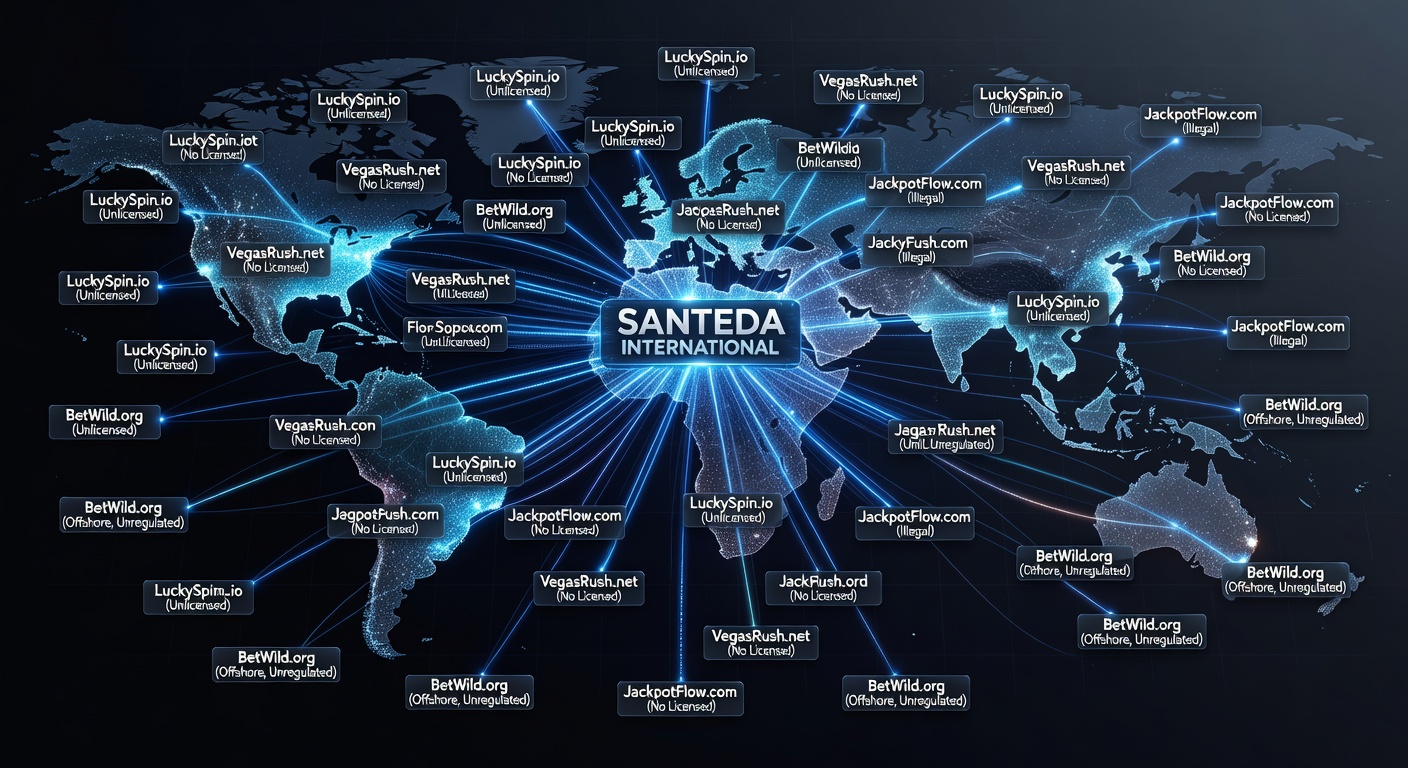
A massive illegal online casino network, spearheaded by Santeda International and featuring unlicensed platforms such as MyStake, Velobet, and Goldenbet, has drawn sharp scrutiny in early April 2026 after revelations surfaced about its aggressive targeting of UK gamblers. These sites, operating without proper authorization, lure players with popular slot titles including Rise of Merlin and Golden Piggy Farm, pulling in a staggering 2.3 million monthly visitors from the UK between November 2025 and January 2026. Affiliates play a key role here, cleverly sidestepping GamStop—the UK's self-exclusion tool—by promoting these platforms through backchannels that evade detection, allowing excluded players to keep wagering unchecked.
What's interesting is how this network, based in Curaçao, weaves in connections to Georgian businessmen via Upgaming AG, a setup that obscures true ownership while deploying fake executives and AI-generated content to maintain a veneer of legitimacy. Players dive into these slots, spinning reels on games that promise thrills but deliver risks, all while the operation rakes in profits from jurisdictions lax on enforcement. Data from traffic analytics underscores the scale; those 2.3 million visits translate to heavy engagement, with UK users comprising a core audience despite the sites' unlicensed status.
And yet, the mechanics behind this influx reveal calculated strategies: affiliates embed links in forums, social media, and email blasts, directing traffic straight to high-stakes slots where features like Merlin's wilds or Piggy Farm's multipliers hook players fast. Observers note that such tactics exploit gaps in cross-border oversight, turning what should be protected markets into fertile ground for unlicensed operators.
Deep Dive into the Network's Structure and Tactics
Santeda International anchors this empire from Curaçao, a hub known for its eGaming licenses that sometimes blur lines between legal and rogue operations; the company lists executives who don't exist, relying on AI to churn out fake bios, testimonials, and even promotional videos that mimic licensed casinos. Upgaming AG, tied to Georgian interests, handles backend tech—payment processing, game aggregation—ensuring seamless play across MyStake's slots library, where Rise of Merlin's expanding symbols and Golden Piggy Farm's cascading wins keep sessions rolling longer than intended.
Turns out, the sites share infrastructure: identical slot portfolios, mirrored promotions like deposit bonuses tied to those featured games, and unified affiliate programs that reward recruiters handsomely for UK traffic. One player, for instance, lost £23,000 on MyStake in a single stretch, a case highlighted amid broader patterns of unchecked spending; such stories emerge from forums where gamblers share screenshots of drained accounts, multipliers that tease jackpots but rarely deliver sustainably.
But here's the thing with GamStop bypasses—affiliates use VPN recommendations, mirror domains, and non-GamStop compliant sign-ups, letting self-excluded users register afresh; experts tracking online gambling flows have observed this loophole widening since late 2025, with UK visits spiking as economic pressures push more toward quick-win slots. Curaçao's regulatory framework, overseen by bodies like the Curaçao eGaming authority, often proves insufficient against such evasion, prompting calls for international coordination.
Player Impacts and the Human Toll
Real losses mount quickly on these platforms; that £23,000 hit on one MyStake account stands as a stark example, but patterns extend further, with players chasing Rise of Merlin's free spins or Golden Piggy Farm's golden frames only to watch balances evaporate amid high volatility. At least one suicide linked to unlicensed gambling rocked communities in January 2026, a tragedy tied directly to such networks where support lines go unanswered and limits aren't enforced.
Figures reveal the broader stakes: UK government estimates peg annual gambling harm costs at £1 billion to £2 billion, encompassing debt, mental health crises, and lost productivity; those who've studied cross-border ops, like researchers at the European Gaming and Betting Association, highlight how unlicensed sites amplify these figures by preying on vulnerable demographics, particularly in markets with robust self-exclusion like the UK's. UK visitors, drawn by familiar slots rebranded for offshore appeal, often start with small deposits that snowball, since withdrawal hurdles—KYC delays, bonus wagering—keep funds locked in.
So, while slots like these pack engaging mechanics—Merlin's rising symbols stacking wins, Piggy Farm's farmyard chaos yielding multipliers—unlicensed environments strip away safeguards, turning entertainment into peril; one forum user detailed a £5,000 night on Velobet, chasing a progressive that never hit, emblematic of the network's design to prolong play.
Affiliate Networks and Traffic Machine
Affiliates fuel the fire, earning commissions up to 50% on UK deposits; they flood Telegram groups, Reddit threads, and Instagram with slot previews—Rise of Merlin's mystic reels glowing invitingly, Goldenbet's Piggy Farm bursting with coins—bypassing ad blocks via crypto payments and direct messaging. Traffic data from November 2025 to January 2026 shows 2.3 million UK uniques, a number that dwarfs some licensed operators, achieved through sheer volume and GamStop ignorance.
Now, Georgian links via Upgaming add layers; the firm supplies white-label solutions, letting Santeda clone sites rapidly, each with tailored UK promos like "£200 welcome on Merlin slots." Observers tracking affiliate payouts note spikes correlating with UK holidays, when slot traffic surges; this isn't random—it's engineered, with AI optimizing ad copy to hook excluded players promising "GamStop-free fun."
Political and Regulatory Ripples in April 2026
Labour MP Alex Ballinger, spotlighting the network in parliamentary debates this April 2026, has pressed for tougher enforcement against offshore incursions, citing the suicide and losses as urgent red flags; his push aligns with growing awareness that self-exclusion tools falter against global affiliates. While UK bodies grapple internally, international parallels emerge—like Australia's Australian Communications and Media Authority cracking down on similar unlicensed sites targeting locals with slots, offering blueprints for multi-jurisdictional action.
That said, Curaçao operations persist, their AI facades fooling casual checks; players who've escaped report identical experiences across MyStake, Velobet, Goldenbet—slots loading fast, wins teased endlessly—prompting demands for affiliate blacklists and traffic monitoring. The £1bn-£2bn harm estimate underscores why this matters, as unlicensed slots siphon revenue from regulated markets while externalizing costs onto public services.
People often find these networks evolve quickly, swapping domains post-exposure, but traffic logs from early 2026 paint a persistent picture; Ballinger's advocacy, amplified by media like The Guardian's April 1 report, signals momentum toward closures, though affiliates adapt relentlessly.
Conclusion
This Santeda-led network exemplifies offshore gambling's reach, channeling 2.3 million UK visitors to unlicensed slots via GamStop cheats, fake fronts, and affiliate savvy, with losses like £23,000 and a January 2026 suicide etching deep scars. As MP Ballinger rallies for action amid £1bn-£2bn annual harms, the Curaçao-Georgia ties highlight enforcement's global puzzle; players spinning Rise of Merlin or Golden Piggy Farm on MyStake, Velobet, or Goldenbet face unbalanced odds in shadows, where AI illusions mask real risks. Watchdogs worldwide, from European associations to Australian regulators, offer paths forward, but the ball's in collaborative courts to seal these bypasses before more traffic—and tragedies—pile up.