Special Round Triggers and Their Impact on Retention Metrics Across Regulated Mobile Gaming Platforms
Leon Frank · Jun 15, 2026
Special Round Triggers and Their Impact on Retention Metrics Across Regulated Mobile Gaming Platforms
Special round activations refer to triggered bonus features such as free spin sequences, multiplier ladders, and interactive mini-games that appear during standard play sessions in mobile slot titles. These mechanics operate within tightly controlled environments where licensing bodies enforce rules on game fairness, payout transparency, and responsible gaming tools. Retention rates measure the percentage of users who return to a platform after their initial session, and industry data consistently links the frequency and design of these activations to longer-term engagement patterns.
Defining Special Round Activations in Mobile Ecosystems
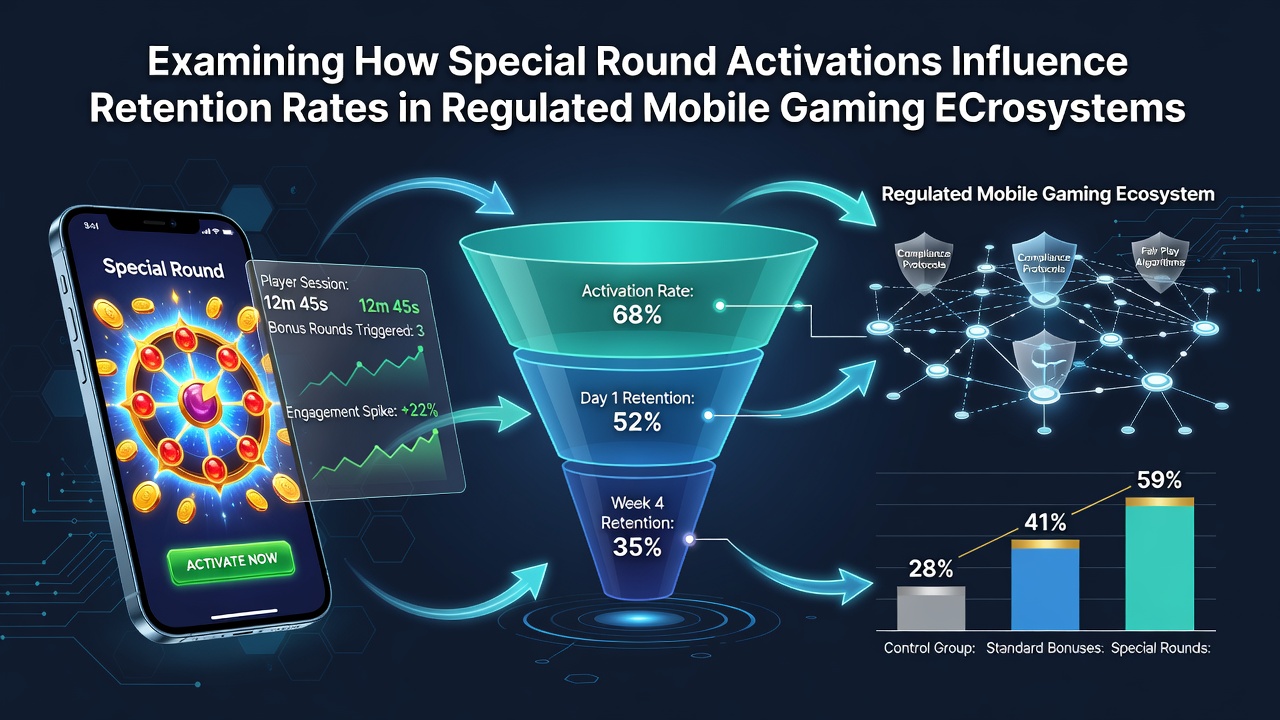
Operators integrate special rounds through random number generator algorithms that meet certification standards set by testing laboratories across multiple jurisdictions. Players encounter these features after specific symbol combinations land on the reels, and the rounds often deliver heightened audiovisual feedback along with altered payout structures. Regulators require clear disclosure of activation probabilities, which means game providers publish return-to-player percentages that account for both base game and bonus contributions. Data collected from licensed platforms in Europe and North America show that titles with activation rates between 1 in 80 and 1 in 120 spins tend to sustain session lengths 18 to 25 percent longer than games without comparable features.
Retention Dynamics in Licensed Markets
Retention tracking relies on anonymized player accounts that record login frequency, deposit behavior, and time spent per session. Studies conducted by university-affiliated research centers indicate that users who experience at least one special round within their first five sessions demonstrate a 32 percent higher likelihood of returning within seven days. Platforms in Australia and Canada report similar patterns, where regulatory frameworks mandate session reminders and loss-limit tools that interact directly with bonus mechanics. When special rounds deliver modest but frequent wins rather than rare large payouts, retention curves flatten more gradually over a 30-day window according to aggregated operator reports.
Regulatory Context and Data Trends Through Mid-2026
By June 2026 several licensing authorities had implemented updated technical standards requiring real-time reporting of bonus round outcomes to central monitoring systems. These changes allow regulators to correlate activation frequency with player return rates across entire markets. Figures released by the Nevada Gaming Control Board and the Victorian Responsible Gambling Foundation reveal that mobile titles featuring cascade-style special rounds maintained monthly retention above 41 percent, whereas standard reel games without such mechanics averaged 29 percent. The reporting requirements also highlight geographic differences, with European markets showing stronger retention when activations include skill-based elements that comply with local rules.
Mechanisms Linking Activations to Continued Play
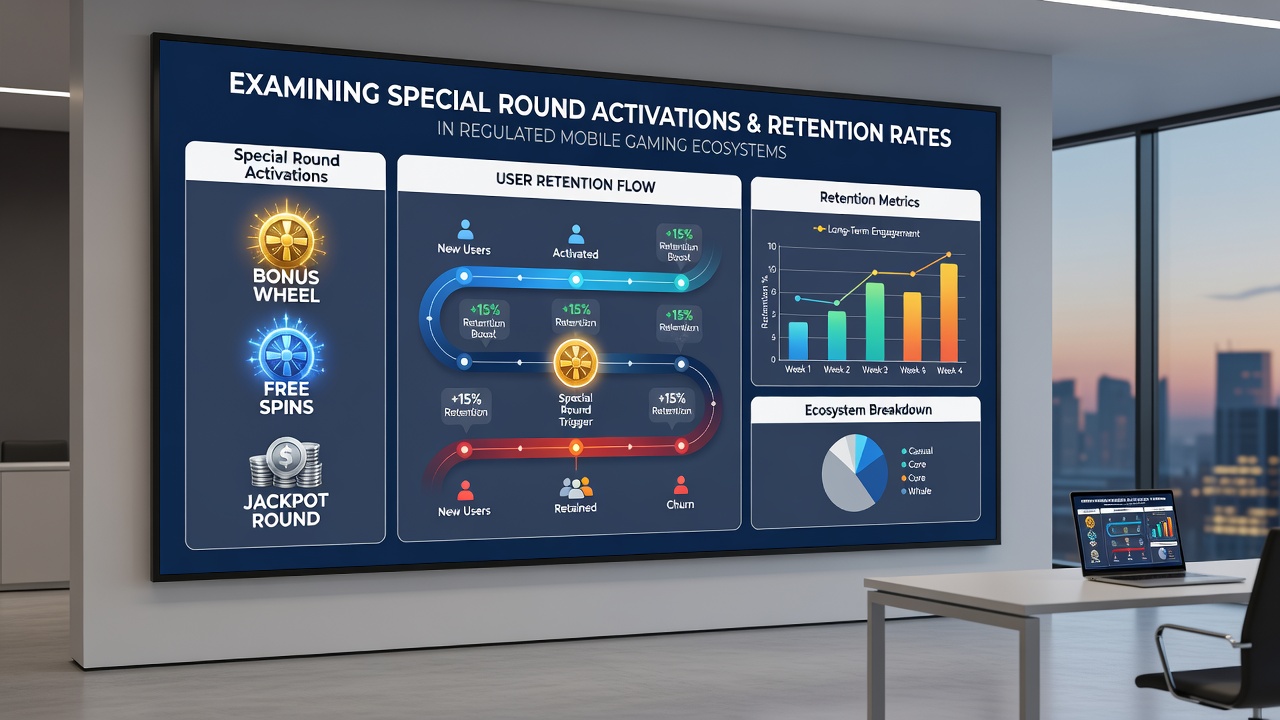
Behavioral tracking systems capture the precise moment a special round begins and ends, allowing analysts to measure dopamine-related engagement spikes through session telemetry rather than self-reported surveys. When rounds incorporate progressive multipliers that build across multiple triggers, players extend their sessions by an average of 4.2 minutes according to anonymized datasets shared with academic partners. Conversely, games that front-load high-value activations early in a session show quicker drop-off after the initial reward, because subsequent base-game spins feel comparatively flat. Platform operators adjust reel weighting and feature frequency during certification renewals to maintain compliance while supporting steady retention curves.
Comparative Evidence from Different Jurisdictions
Research coordinated by the International Gaming Institute at the University of Nevada examined over 2.3 million mobile accounts across three regulated markets and found that special round variety, rather than frequency alone, correlates most strongly with 90-day retention. Games offering three or more distinct activation types retained users at rates 11 percentage points higher than titles limited to a single bonus format. In parallel, the Victorian Responsible Gambling Foundation documented that mandatory reality-check pop-ups placed immediately after special rounds reduced voluntary session terminations by 14 percent without lowering overall activation-driven engagement. Canadian provincial data similarly indicates that clear probability disclosures presented during bonus entry screens help maintain trust metrics that indirectly support long-term retention.
Operational Adjustments and Measurement Challenges
Game studios fine-tune activation thresholds during the certification process to balance excitement with regulatory expectations around game fairness. Post-launch monitoring relies on key performance indicators that separate bonus-driven returns from organic base-game play, which helps isolate the true contribution of special rounds. Some platforms now deploy A/B testing frameworks approved by regulators to compare retention under different activation schedules while keeping all other variables constant. These controlled experiments provide clearer causal links than observational studies alone, although sample sizes must remain large enough to satisfy statistical power requirements set by oversight bodies.
Conclusion
Special round activations function as measurable components within regulated mobile gaming systems that directly shape retention outcomes when properly calibrated to jurisdictional standards. Available data from multiple licensing regions demonstrate consistent relationships between feature design, activation frequency, and user return rates through June 2026 and beyond. Continued collection of standardized telemetry will allow researchers and operators to refine these mechanics while maintaining compliance with evolving responsible gaming mandates.